Landscape
Design
We design native plant gardens, edible landscapes, pollinator habitat, and full-yard transformations rooted in real ecological practice and the Florida-Friendly Landscaping™ principles.
Our design philosophy is centered on creating nature-friendly landscapes that meet your individual needs and reflect the distinctive charm of Gainesville's native flora. From a single new flower bed to a full-yard redesign, every project is built with environmental impact and long-term potential in mind. When possible, we use recycled materials and source from local vendors.
We take a whole-yard ecological approach to every design. We think about drainage. Growth habits of existing and new plants. Yearly cycles. Soil. Sun. The way water moves across your property after a summer storm. We design with longevity in mind, and we try to envision what each design will look like at day 50, day 500, and day 5,000 after installation.
We take a nature first approach. Our design philosophy is about creating environments you can enjoy and that native plants and animals can call home. Our joke is, "You call us when you want MORE bugs in your yard." 🌱🌼🐛🦋
Florida-Friendly Landscaping™ Certified Professional
Florida Native Plant Society Member
2024 City of Gainesville Green Business Award Winner
Featured on “Flip My Florida Yard”
Florida-Friendly Landscaping™
Florida-Friendly Landscaping (FFL) is a research-based, science-led set of principles developed by the University of Florida Institute of Food and Agricultural Sciences (UF/IFAS) along with the Florida Department of Environmental Protection. It's not a marketing label — it's a body of practice that's been refined over thirty years of research into how to grow beautiful, productive, low-impact yards in Florida's specific conditions.
The core idea is simple: design your yard around the ecosystem you actually live in, instead of fighting it. That means using plants adapted to north Florida's heat, humidity, sandy soils, and seasonal rainfall patterns. It means managing water carefully, fertilizing only when needed and only in the right amounts, and giving wildlife — pollinators, songbirds, beneficial insects — the resources to keep your yard healthy without chemical inputs.
A Florida-Friendly yard isn't a particular look. It's not all native plants and no grass. It's not anti-lawn. It's a framework for making smart decisions about your specific yard — and the results tend to be lower water bills, less fertilizer cost, fewer pest problems, and a yard that gets more interesting and more alive every year.
Learn more about the Florida Friendly Landscaping Program here:

-
Match plants to your specific yard conditions — sun, shade, soil moisture, mature size, salt exposure. A plant in the wrong spot will struggle, demand water and chemicals, and probably die anyway. A plant in the right spot thrives with almost no intervention.
-
Irrigate only when plants show signs of needing it. Most established Florida-Friendly plantings need little to no supplemental water after their first year. Drip irrigation, rain sensors, and mulch all dramatically reduce water use. Your water bill drops, and so does fungal disease.
-
Most Florida lawns and beds are over-fertilized. Excess nitrogen and phosphorus run off into our springs and the Gulf, where they cause the algal blooms you've read about. The right-amount-at-the-right-time approach saves money and keeps water clean.
-
Two to three inches of mulch over plant beds suppresses weeds, retains moisture, regulates soil temperature, and slowly feeds the soil as it breaks down. It's one of the highest-leverage things you can do for a yard.
-
Pollinators, songbirds, and beneficial insects all do work in your yard if you give them habitat. Native plants are the foundation — they evolved alongside the wildlife and provide food, shelter, and the right life-cycle cues. A pollinator garden isn't decorative; it's a working ecosystem.
-
Most "pest" problems are symptoms of a deeper issue — wrong plant for the spot, soil problems, water stress. We use Integrated Pest Management (IPM) principles, which means identifying the actual cause and intervening with the lightest possible touch. Broad-spectrum pesticide spraying is almost always the wrong answer.
-
Grass clippings, leaves, and pruned material are nutrients. They belong in your compost pile, on your beds as mulch, or returned to the lawn — not in plastic bags on the curb. A composting system pays for itself within a year and dramatically reduces your need for store-bought soil amendments.
-
Hard surfaces — driveways, walkways, roofs — send water rushing off your property carrying fertilizer, pesticides, and oil. Rain gardens, swales, permeable paving, and well-placed plantings slow water down and let it soak in, which protects the aquifer and keeps our springs running.
-
If you live on a lake, creek, or pond, the ten feet closest to the water deserve special attention. A planted buffer zone of natives prevents erosion, filters runoff, and protects the water body itself. This is where the FFL approach has the biggest direct ecological impact.
Why North Florida Yards Are Different
Sandy, fast-draining soils
Most of Gainesville sits on sand. That's fine for many natives and dreadful for plants that need moisture-holding loam. Soil amendment and plant selection both have to account for it.
Hot, humid summers — and surprisingly cold winters
Along with summer heat we get nights in the 20s most years. Tropical plants that thrive in central and south Florida often die back here. Choosing zone-appropriate natives means a yard that survives the summer and the next freeze.
Heavy summer rainfall, dry springs
Rainfall patterns are not constant — they're dramatically seasonal. Designs that ignore this either flood in July or burn up in April.
Karst topography and the Floridan Aquifer beneath us.
What you put on your lawn ends up in the aquifer, which is the drinking water source for almost everyone in this region. Fertilizer choices, and pesticide connect directly to water quality.
Hire a landscaper that understands our unique environment. Gainesville is not Miami. It's not Tallahassee. It's not Tampa. We sit in north-central Florida, a specific growing zone with sandy, fast-draining soils, summer humidity that grows mold like nothing else, and winter nights that drop into the 20s. Generic landscaping advice and big box store, out-of-state nursery recommendations will get a lot of yards in trouble here.
Local knowledge is the difference between a landscape that thrives for decades and one that needs replanting every other year.
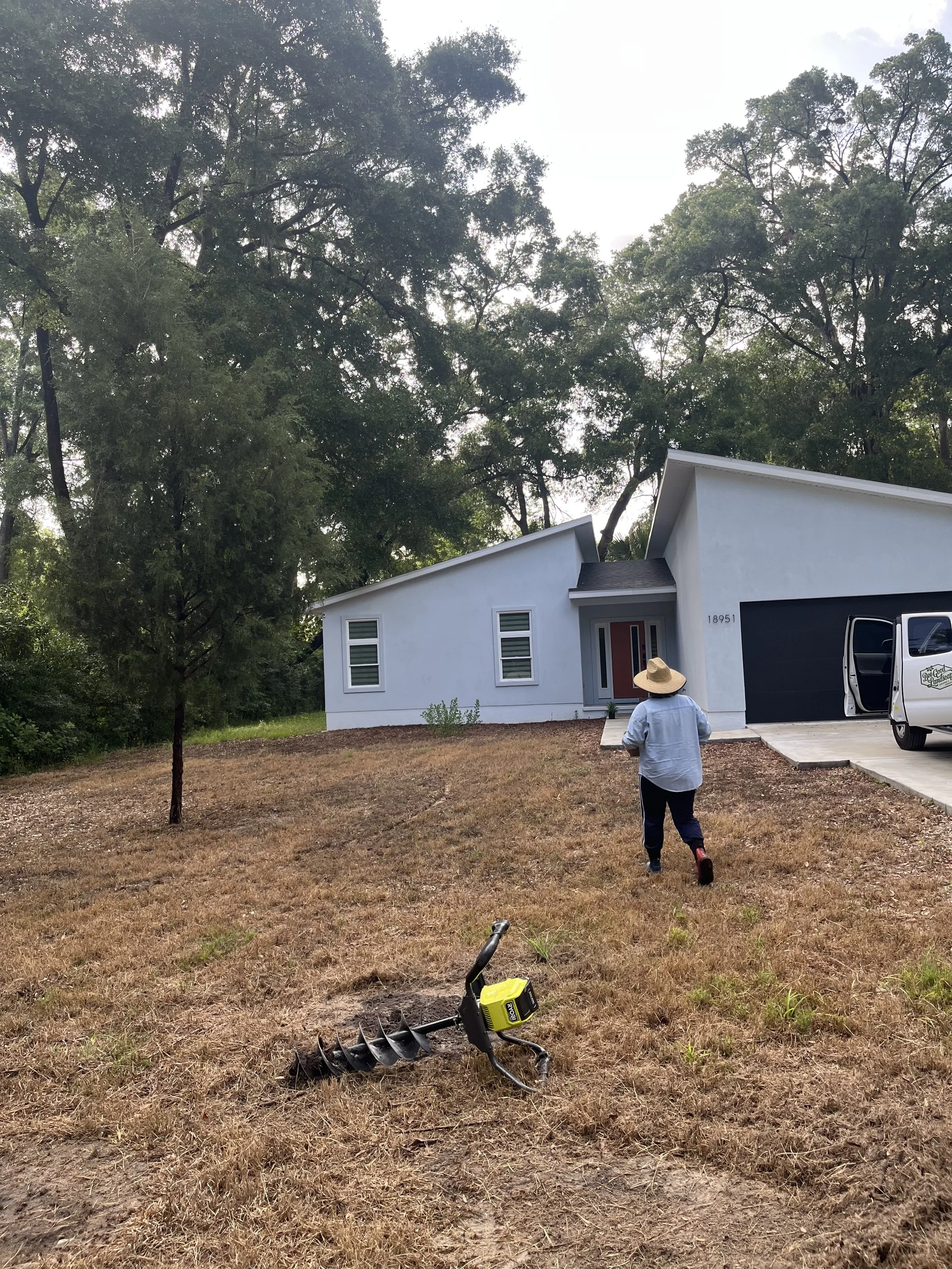
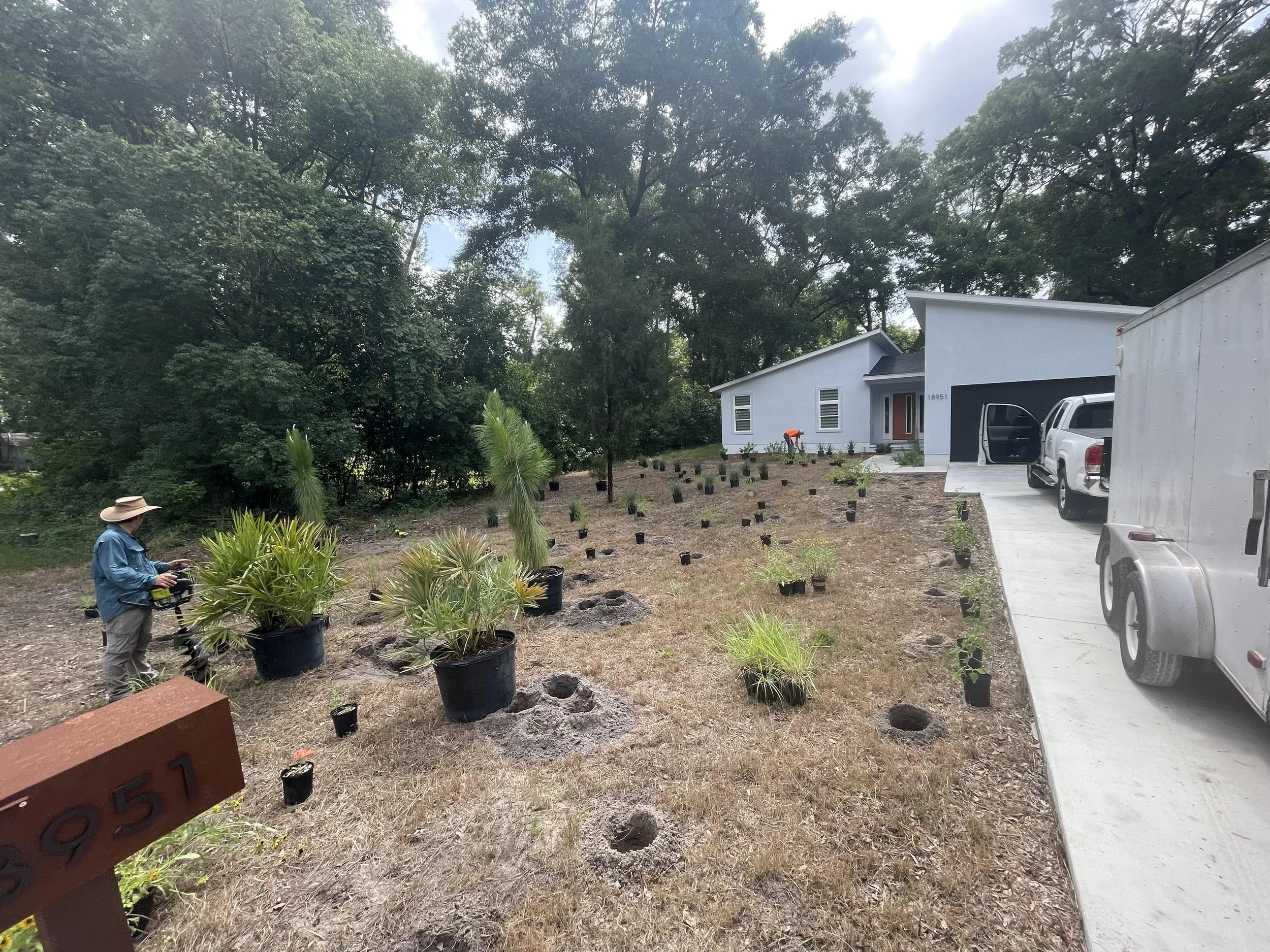
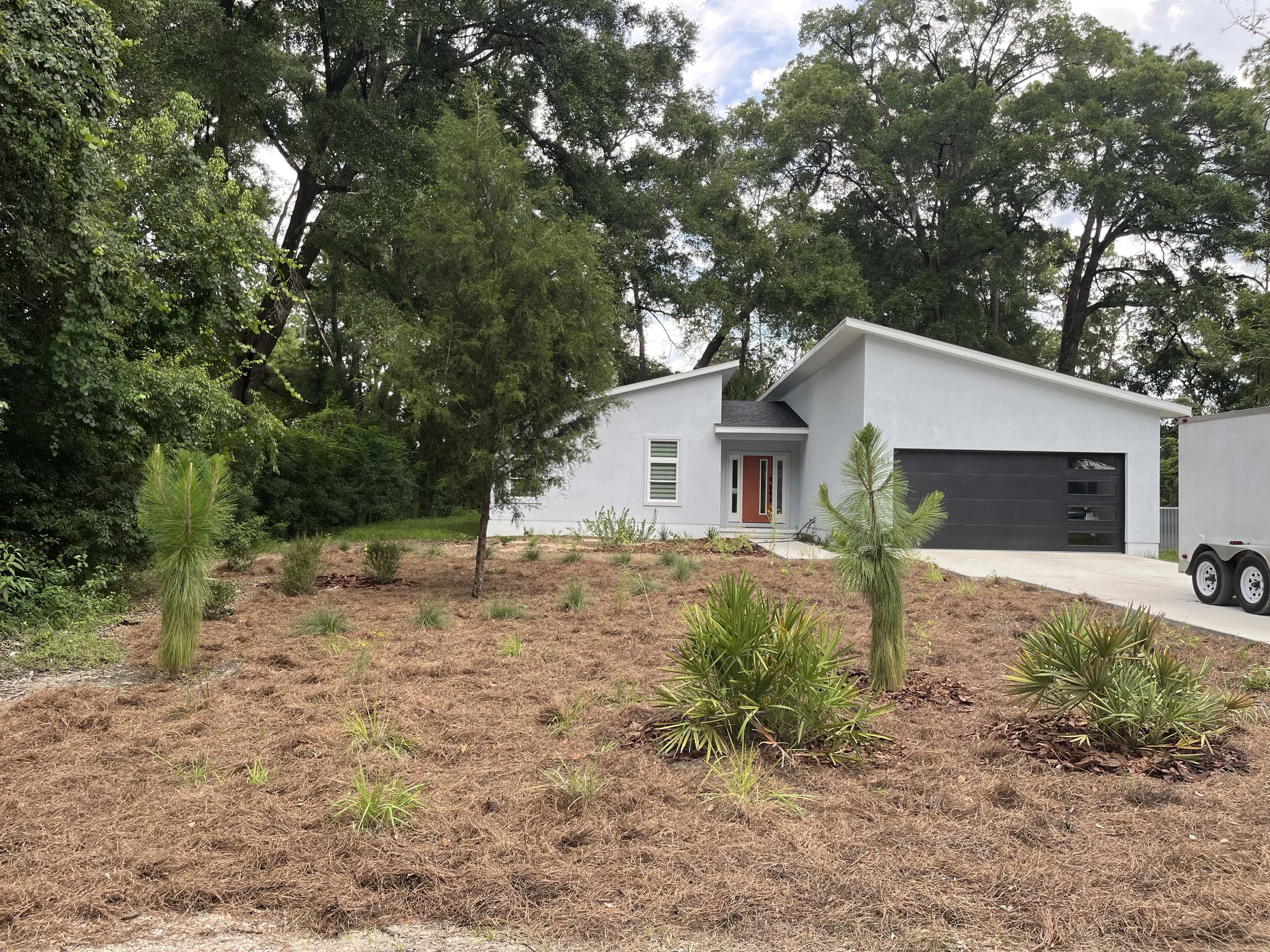
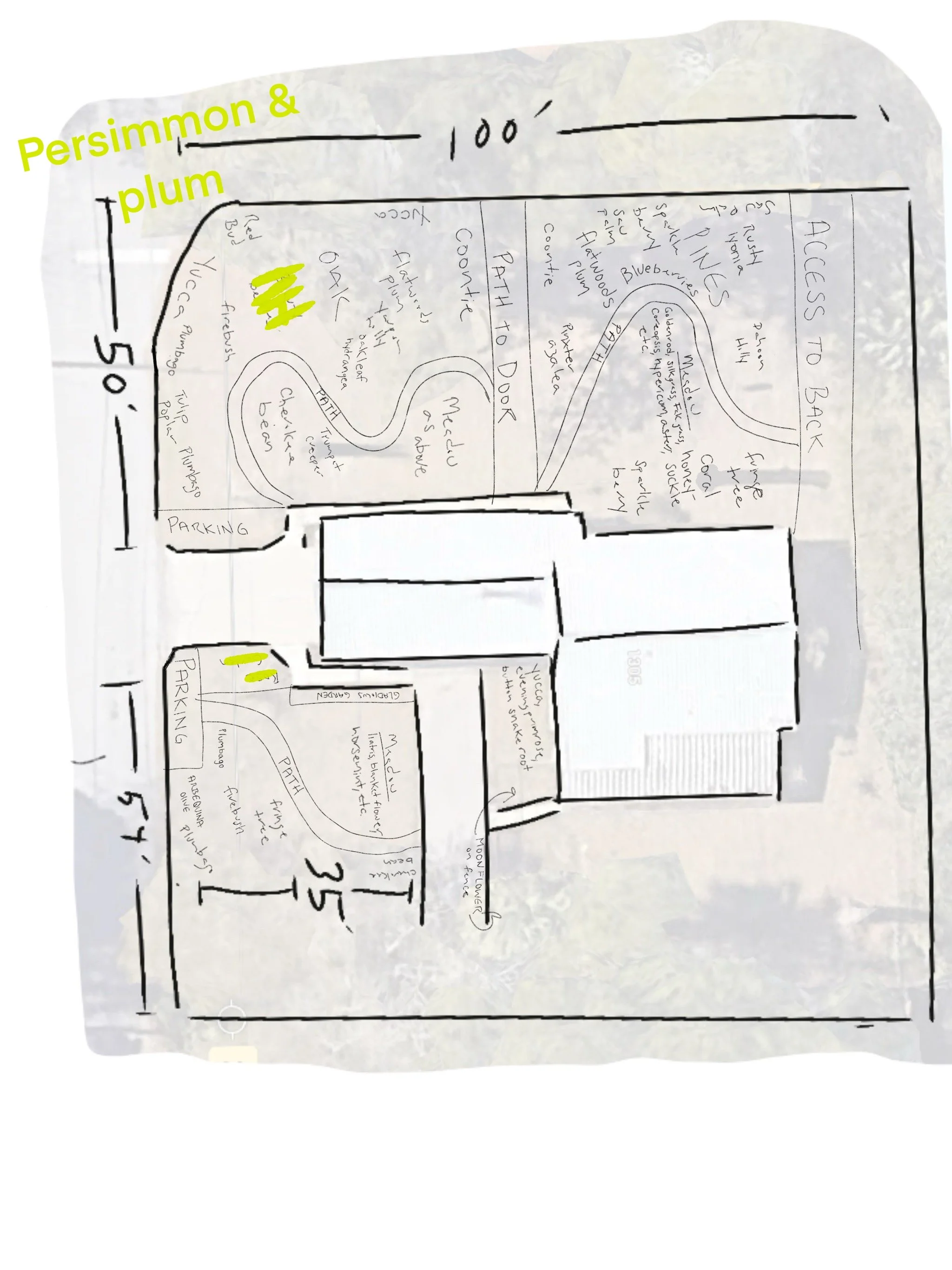
Highlighted Project:
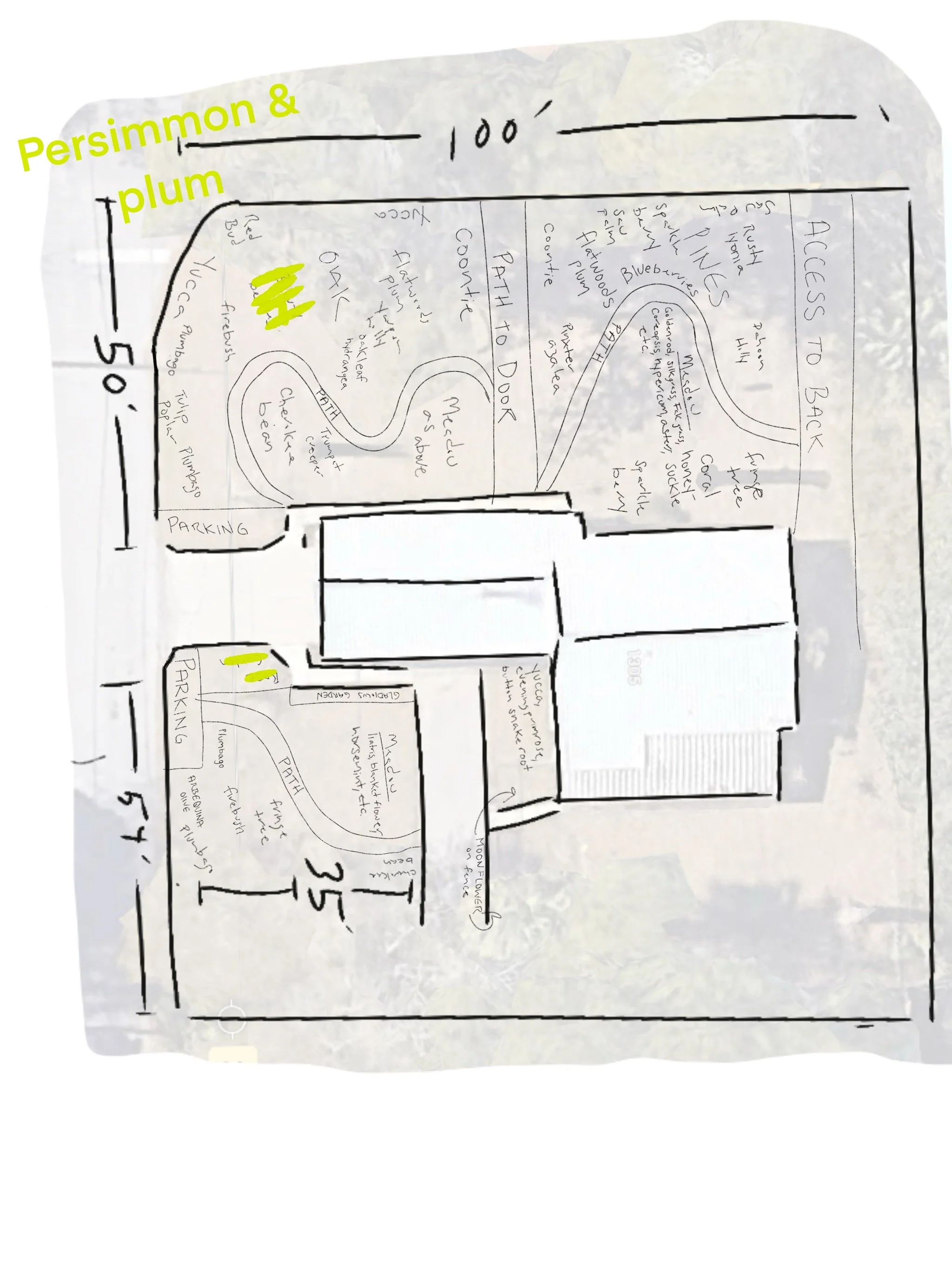
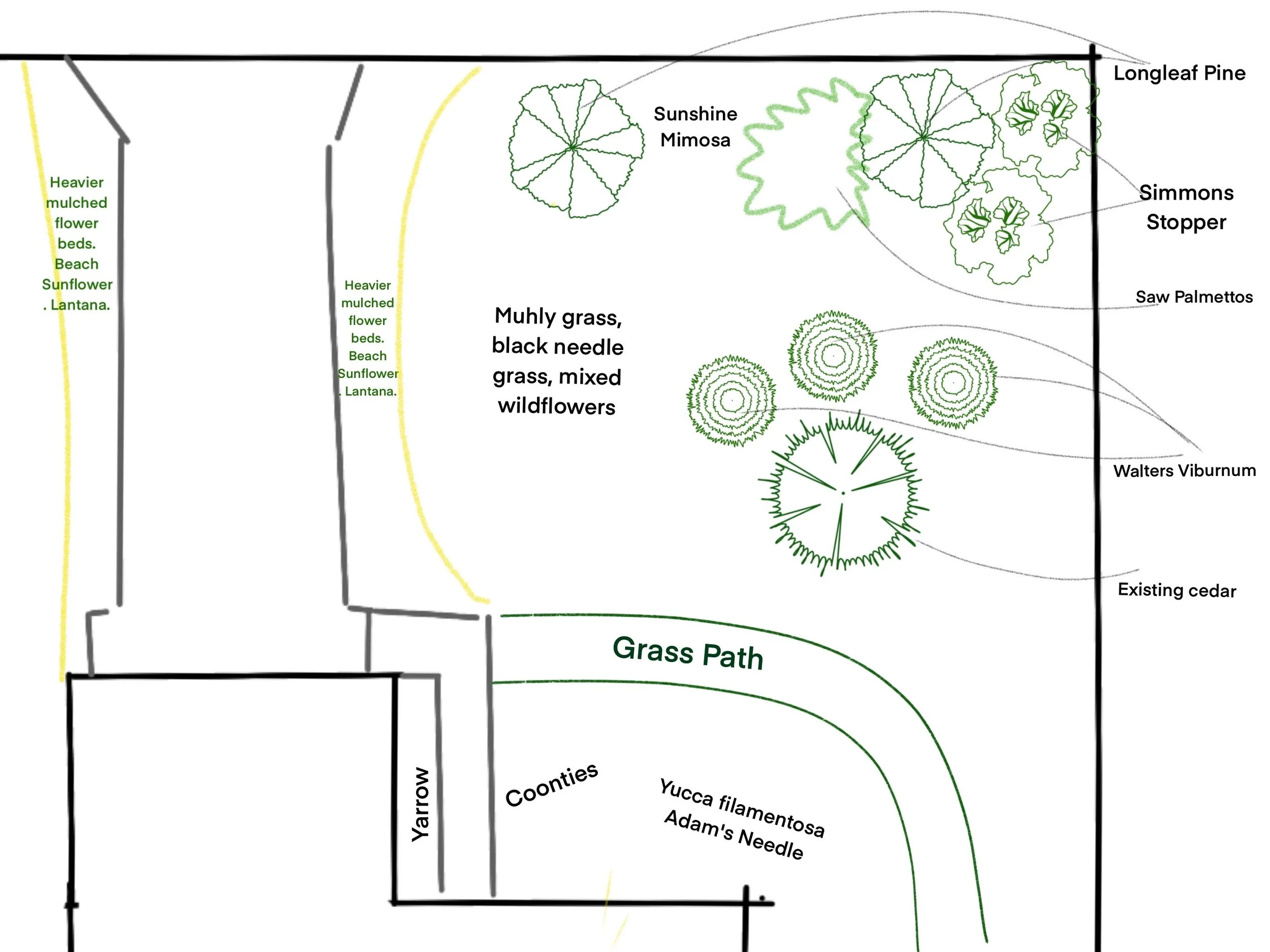
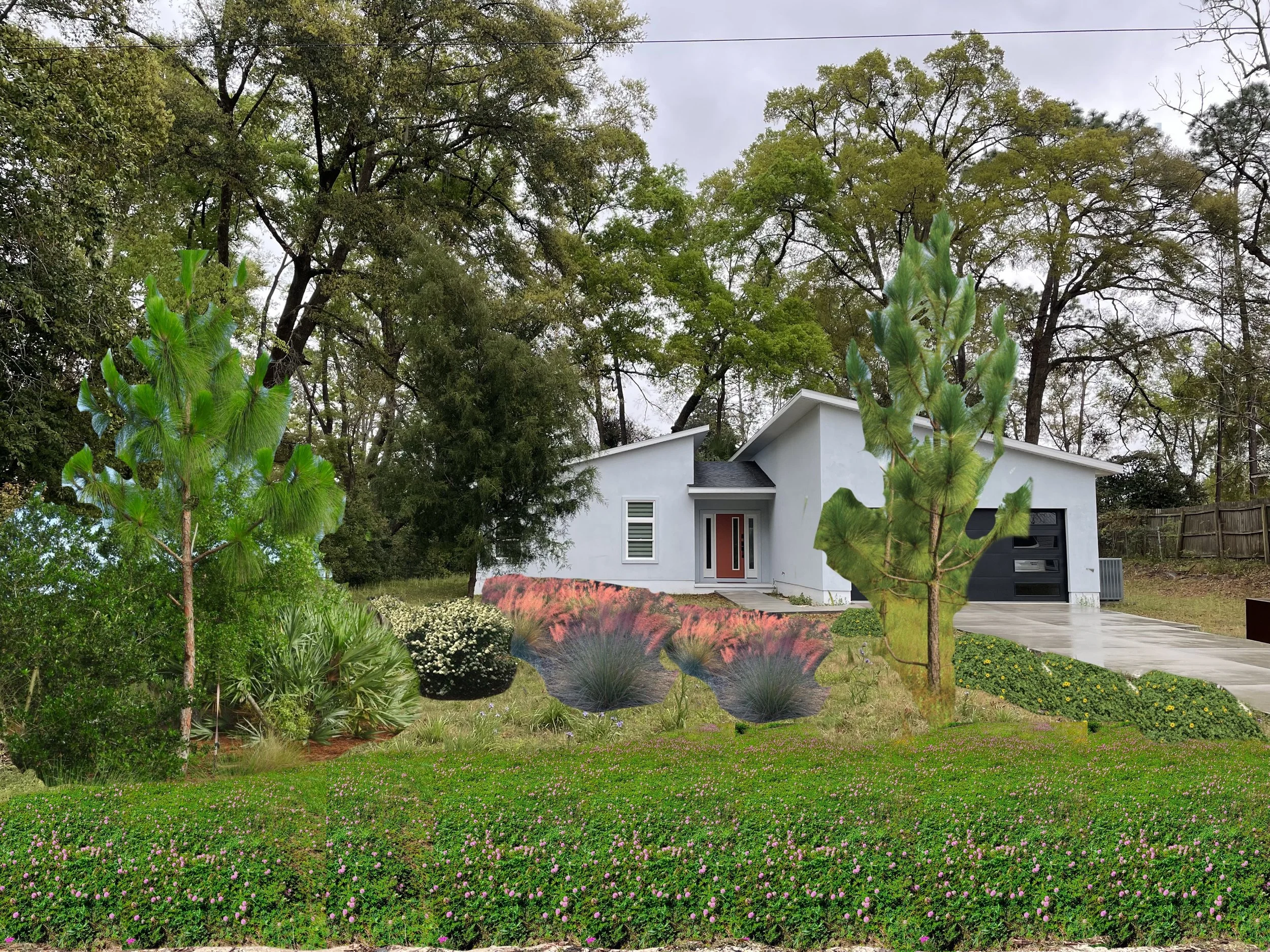
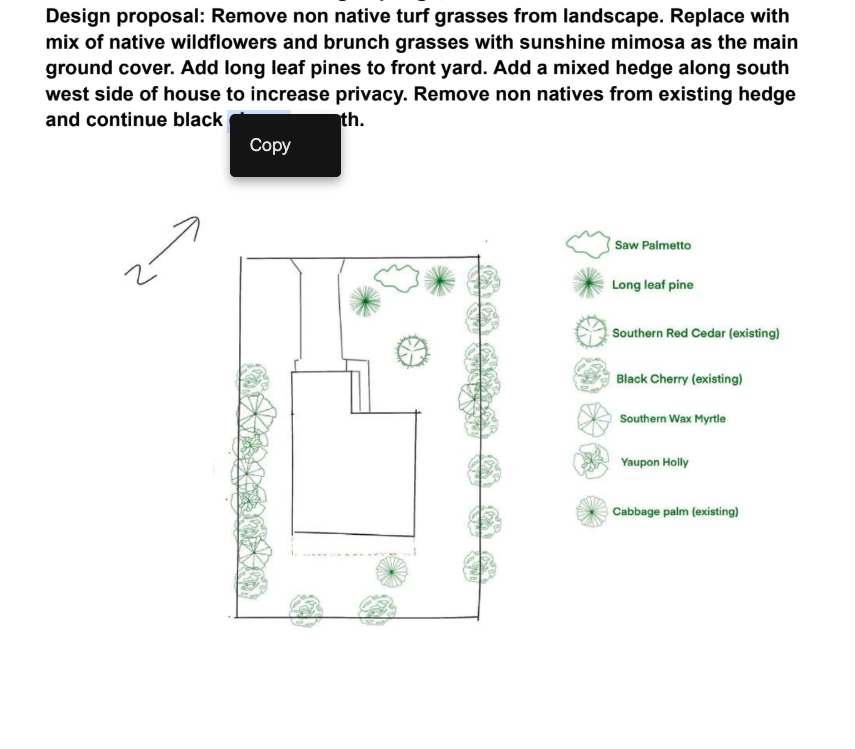
Young Longleaf Savannah Front Yard
Vision/Design Process:
Planting and care: